
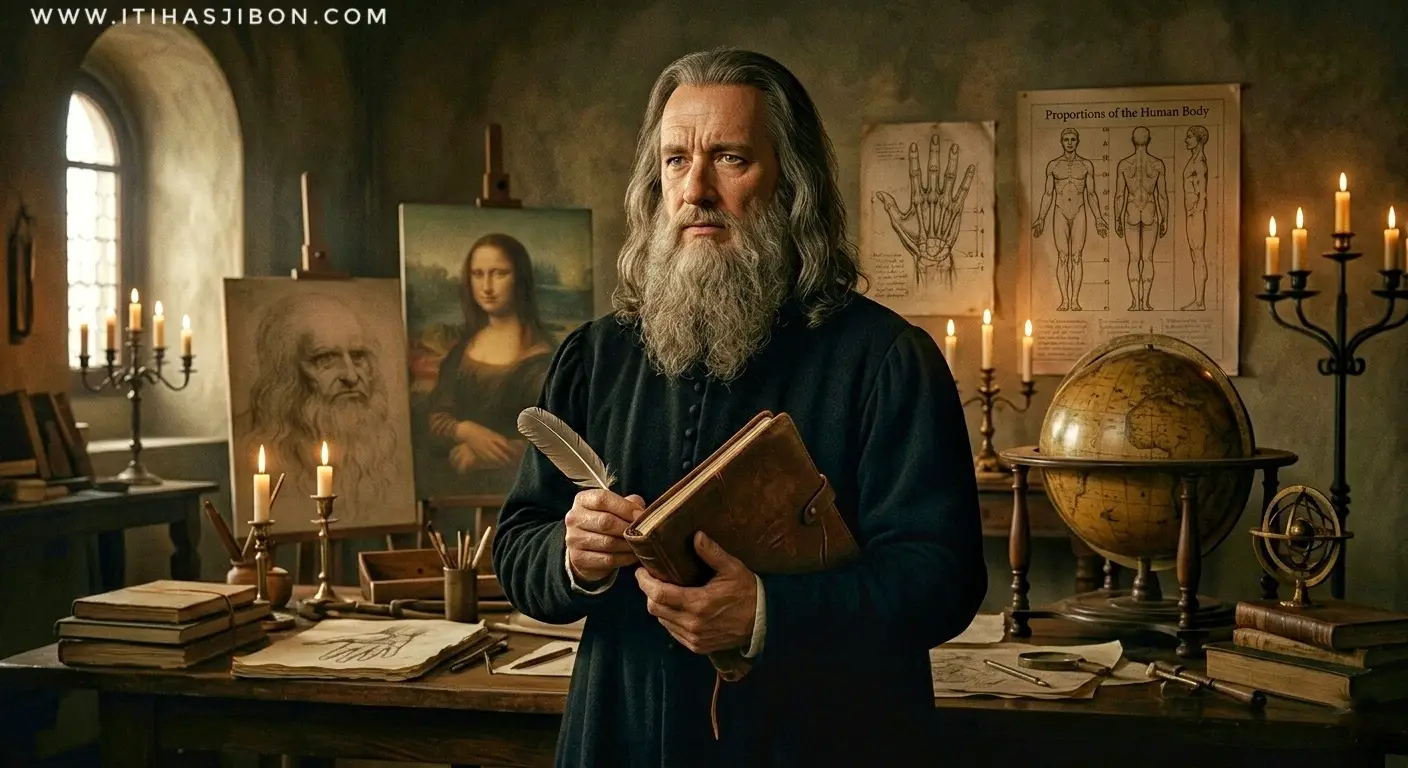
History has witnessed many great minds, but none quite as multifaceted as Leonardo da Vinci. Often described as the “Universal Man,” Leonardo was not just a painter but a visionary who excelled in science, anatomy, engineering, and mathematics. This Leonardo da Vinci biography explores the life and legacy of a man who was centuries ahead of his time.
1. Early Life and the Gift of Observation
Leonardo was born on April 15, 1452, in the small village of Vinci, Italy. He did not receive a formal education in the traditional sense, but he possessed an extraordinary power of observation. As a child, he spent countless hours in nature, sketching birds in flight and the movement of water. This deep curiosity laid the foundation for his future as a world-renowned innovator.
2. Master of Art: Mona Lisa and The Last Supper
In the world of art, Leonardo is unparalleled. His masterpiece, the ‘Mona Lisa’, is perhaps the most famous and debated painting in the world. The enigmatic smile of the subject continues to baffle historians and scientists alike.
Another iconic work, ‘The Last Supper’, remains a cornerstone of religious art. Leonardo utilized a technique called ‘Sfumato’—a subtle blending of colors and tones—to create a lifelike depth that had never been seen before. To him, art and science were inseparable; he used his knowledge of light and optics to make his canvases breathe.
3. An Inventor Ahead of His Time
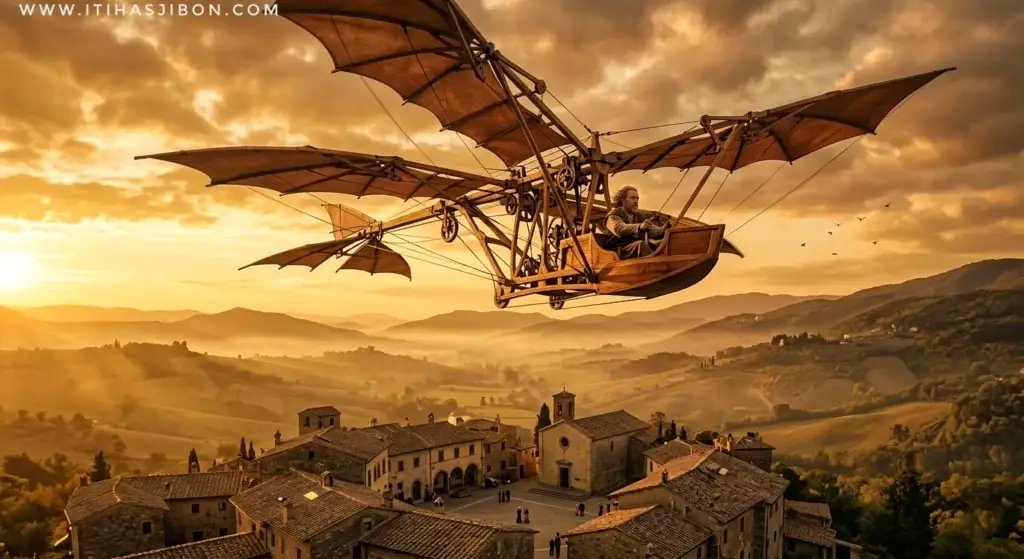
Beyond the canvas, Leonardo was a prolific inventor. His notebooks, filled with thousands of pages of sketches, reveal designs for machines that would not be built for another 400 years.
- Flying Machines: Long before the Wright brothers, Leonardo sketched detailed plans for a helicopter-like device (the Aerial Screw) and a parachute.
- War Machines: He designed armored tanks, multi-barrelled guns, and even giant crossbows for the rulers of his time, though most remained only on paper due to the technological limits of the 15th century.
4. The Study of Human Anatomy
Leonardo’s curiosity extended deep into the human body. He was one of the first to perform detailed dissections of human cadavers to understand the skeletal and muscular systems. His famous drawing, the ‘Vitruvian Man’, serves as a perfect example of his ability to blend art with the mathematical proportions of the human form. His anatomical sketches were so accurate that they are still studied by medical historians today.
5. Secret Notebooks and Mirror Writing
One of the most fascinating aspects of Leonardo’s life is his habit of “Mirror Writing.” He wrote his notes from right to left, meaning they could only be read clearly when held up to a mirror. Some believe he did this to protect his ideas from being stolen, while others think it was simply easier for him as a left-handed person. These notebooks also reveal his personal life—his vegetarianism and his immense love for animals.
6. Final Years and Lasting Legacy
Leonardo spent his final years in France under the patronage of King Francis I. He passed away on May 2, 1519. On his deathbed, legend says he expressed regret, feeling he had not accomplished enough in his lifetime. Yet, the work he left behind remains the gold standard for human achievement.
Today’s Lessons:
Leonardo da Vinci taught the world that curiosity is the greatest tool for learning. His Leonardo da Vinci biography continues to inspire millions to think beyond boundaries and bridge the gap between art and science. Whether you are an artist or an aspiring engineer, Leonardo remains the ultimate role model for a creative mind.
How do you like today’s topic? Which discovery of Leonardo da Vinci surprised you the most? Let us know in the comments and share this post with your friends! Peace